
 |
Study of the energy potential of surplus green hydrogen produced in a sodium chlorate manufacturing plant M. Gerfauo and S. F. P. Dias
2024/07/20 |

Abstract
This paper addresses the inherent energy potential of hydrogen generated as a byproduct in a sodium chlorate production plant, emphasizing the existence of a significant surplus that is released into the atmosphere. Different technological options aimed at efficiently utilizing this surplus hydrogen are presented and discussed, covering areas such as energy storage, sustainable mobility, as well as Power-to-Gas and Power-to-Liquid technologies. With the objective of elucidating the potential economic and social impact of each approach, while taking into account the regional peculiarities inherent to the manufacturing plant. The results obtained indicate that the integration of hydrogen as a clean energy source can optimize operational efficiency and reduce the carbon footprint associated with sodium chlorate production. Consequently, this leads to increased energy autonomy for the facility and contributes to the principles of environmental sustainability. The study emphasizes the potential of hydrogen as a valuable and sustainable resource, promoting benefits for both the industrial sector and the environment. It is important to note that the production process generates a significant amount of waste, with an estimated annual volume of 750 tons. This highlights the need to implement efficient waste management practices and avoid unnecessary waste of this crucial energy carrier. By minimizing waste and maximizing the utilization of hydrogen, we can further enhance the economic and environmental benefits associated with its production and utilization.
Published in: Renewable Energies, Environment
& Power Quality Journal (REE&PQJ), Vol. 2 |
|
| Pages: 127-132 | Date of Publication: 2024/07/20 |
| ISSN: 3020-531 X | Date of Current Version: 2024/04/15 |
| REF: 307-24 | Issue Date: July 2024 |
| DOI:10.24084/reepqj24.307 | Publisher: EA4EPQ |
Authors and affiliations
M. Gerfauo and S. F. P. Dias
Department of Mechatronics Engineering. UTEC, Technological University of Uruguay. ITRSO - Fray Bentos, Ruta Panorámica, 3716 (Uruguay)
Key words
Green Hydrogen, Energy Efficiency, Hydrogen Characteristics, Sodium Chlorate, Power-to-X.
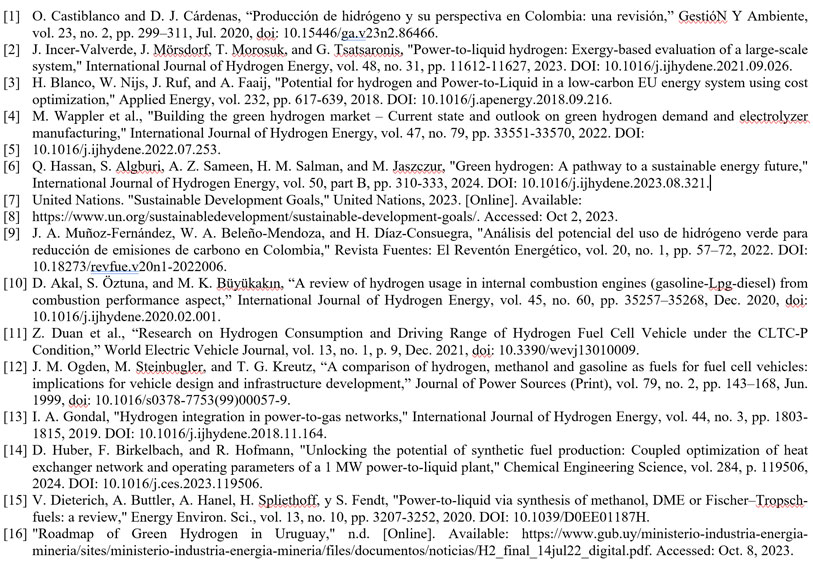
References


REE&PQJ is edited by: European Association for the Development of Renewable Energies, Environment and Power Quality (EA4EPQ/AEDERMACP) Copyright © 2025 EA4EPQ All rights are reserved
|