
 |
Energy storage possibility for an Energy Community
Péter Kádár, Norbert Boross
2024/07/20 |

Abstract
Pilisszentlászló is a settlement of 1000 inhabitants in the Budapest agglomeration, in a hilly environment in Hungary. The municipality is committed to sustainability, including energy management. The village intends to establish an Energy Community, installing as many local small Photo Voltaic generation units as possible. Increasing the security of energy availability and energy storage were considered viable options. In this paper we investigate three possible and sustainable energy storage methods. We have also assessed the solutions by the life cycle analysis (LCA) approach, which examines the overall environmental impact instead of short-term financial aspects.
We investigated the kinetic "energy train", the microPSP (Pumped Storage Plant) and the battery storage solutions. Conceptually, we also dealt with rolling stock and track for the “energy train” solution. Specific calculations were made with idealized storage units regarding the maximum amount of energy that can be stored. For certain spring/summer/autumn consumption and PV production scenarios, the optimal energy storage capacities were determined. Finally, we compared the three energy storage options that seem feasible in the village of Pilisszentlászló. Despite all our expectations, and the initial preference of the local community, our current best recommendation is the battery storage. Further studies may lead to other, improved solutions.
Published in: Renewable Energies, Environment
& Power Quality Journal (REE&PQJ), Vol. 2 |
|
| Pages: 292-299 | Date of Publication: 2024/07/20 |
| ISSN: 3020-531 X | Date of Current Version: 2024/04/15 |
| REF: 434-24 | Issue Date: July 2024 |
| DOI:10.24084/reepqj24.434 | Publisher: EA4EPQ |
Authors and affiliations
Dr. Péter Kádár, senior member of IEEE; Dr. Norbert Boross
Óbuda University. KVK Dept. of Power Systems, Alternative Energy Sources Knowledge Centre. Bécsi u. 94. Budapest H-1034 HUNGARY
Key Words
Energy community, energy storage, kinetic energy train, microPumped Storage Plant.
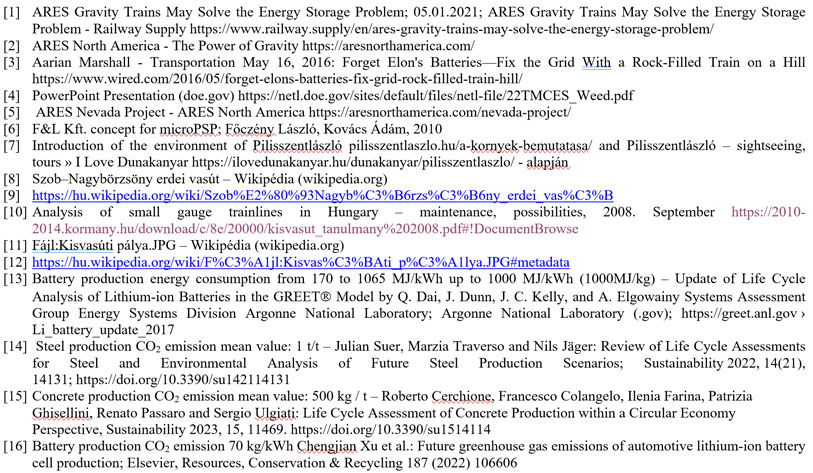
References


REE&PQJ is edited by: European Association for the Development of Renewable Energies, Environment and Power Quality (EA4EPQ/AEDERMACP) Copyright © 2025 EA4EPQ All rights are reserved
|